


A survey of Finnish comic artists showed that professionals have a strong identity. However, the Finnish comics scene still faces many problems.
This article was edited by Sarjainfo magazine for international publication in the Norwegian online comics journal Empirix, and it is available in Norwegian here.
Text: Ville Hänninen
Photos: Helsinki Comics Festival 2025
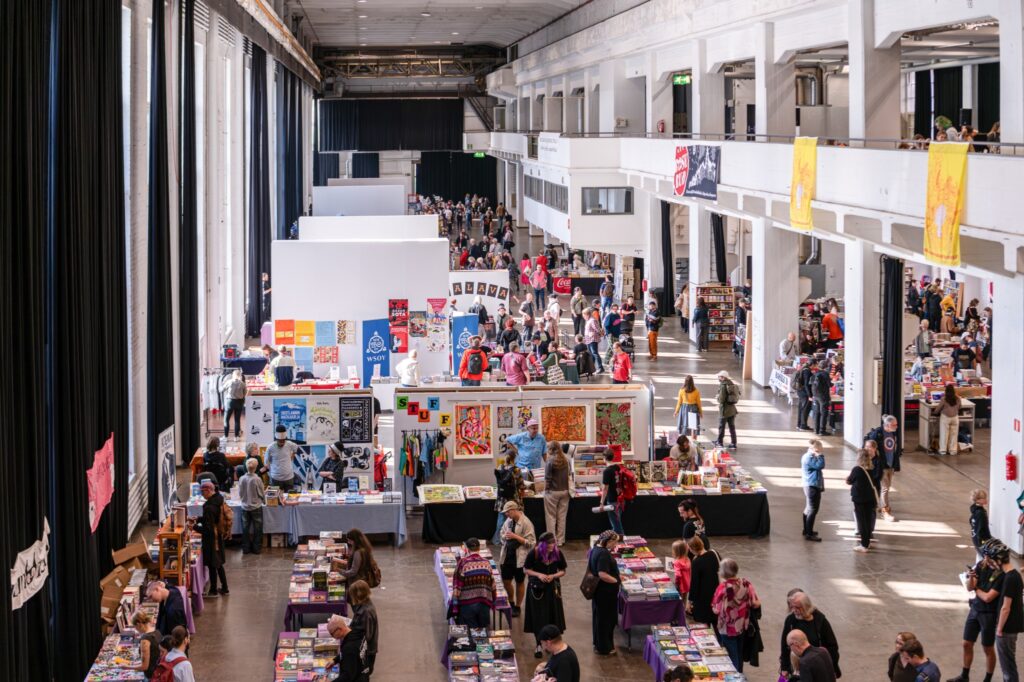
All the article photos illustrate active creative work in the Finnish comics scene and Helsinki Comics Festival. They are not directly related to the responses and conclusions in the article. Festival sales in September 2025 at the Cable Factory. Photo: Juho Liukkonen.
In 2023 I conducted a study on the state of comics in Finland. Sarjakuvan paikka [“Where do comics belong?”] examines the position and possibilities of comics within the whole Finnish art scene. It also analyses the positive and negative courses of development in the field during the 2000s.
Finnish and Norwegian comics cultures differ superficially, and there are some differences in the arts funding system. However, there is much in common among the small Nordic countries. The same was evident in a recent publication on the Danish comics scene (Danske tegneseriers tilstand: statusrapport og handlingsplan, 2024).
The previous Finnish survey of the comics field was carried out 20 years ago. Since then the number of comic artists has grown significantly. The same applies to the amount of books being published. A significant amount of the comic artists are members of Sarjakuvantekijät, Finnish Comics Professionals. Its membership has risen from a little over a hundred to just under two hundred.
Equally important is that the position of comic artists within the state arts support system is, at least for now, relatively stable. The amount of grants and awards has also slowly increased. The same trend is visible in private foundations as well.
The role of foundations in Finnish art as a whole is on the rise. The Finnish right wing government has made significant cuts to the cultural budget, and this has affected artist grants to some extent.
My study considers the status of comic art and the identity of the contemporary comic artist by using two main methods: interviews with professionals and experts, and a survey sent to a broader group of artists. The Finnish comic artists’ organisation Kutikuti commissioned an artist survey in May 2023, in cooperation with Sarjakuvantekijät.
One hundred and eleven comic artists responded, which is over half of the membership of Sarjakuvantekijät. Therefore the sample is highly relevant.
Given responses clarify artists’ perceptions of their profession, its opportunities and its threats. The number of respondents also indicates that comic artists are rarely asked about their views and working conditions.
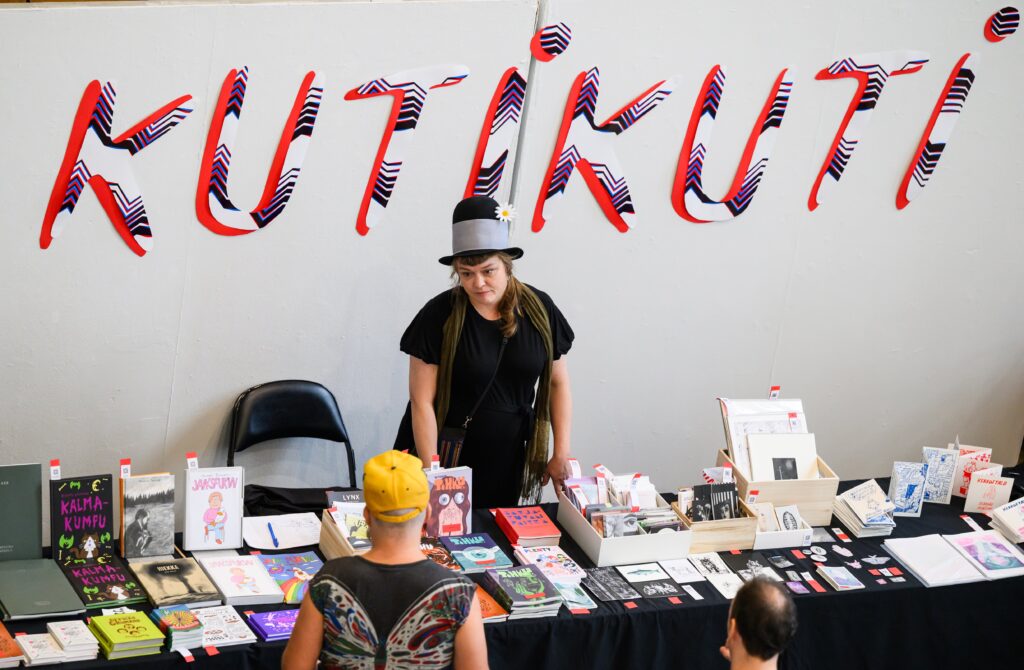
Kutikuti collective and Hanneriina Moisseinen at Helsinki Comics Festival. Photo: Joonas Kohonen
Work is this, that and something else as well
As long as the profession has existed, the comic artist’s identity has been characterised and hampered by the sporadic nature of the work. In addition to comics, artists do plenty of other things: they work as teachers, do graphic design, illustrations or visual art. One problem lies within the grant system: comic books require a lot of work, but long-term grants are scarce. This leads to the need for making comics alongside other jobs.
According to the survey, 33 of the 111 respondents — roughly thirty percent — want and are able to make comics full-time. Grants are crucial because sales of comic works are small in Finland as well.
Nineteen respondents make comics part-time and 59 do so on a project basis. In other words, over two-thirds of the artists have to create comics alongside other work.
The (short) duration of grants practically affects the ability to do demanding artistic work and to finish them. Because project grants are small, they fragment the implementation of work and interrupt projects, at least temporarily.
One respondent summed up the dilemma as follows:
”Grants enable the partial realisation of comics projects. More than once small grants have made it possible to start a project, but the lack of sufficient funding has forced [the respondent] back to day jobs and a demanding project has had to be abandoned halfway.”
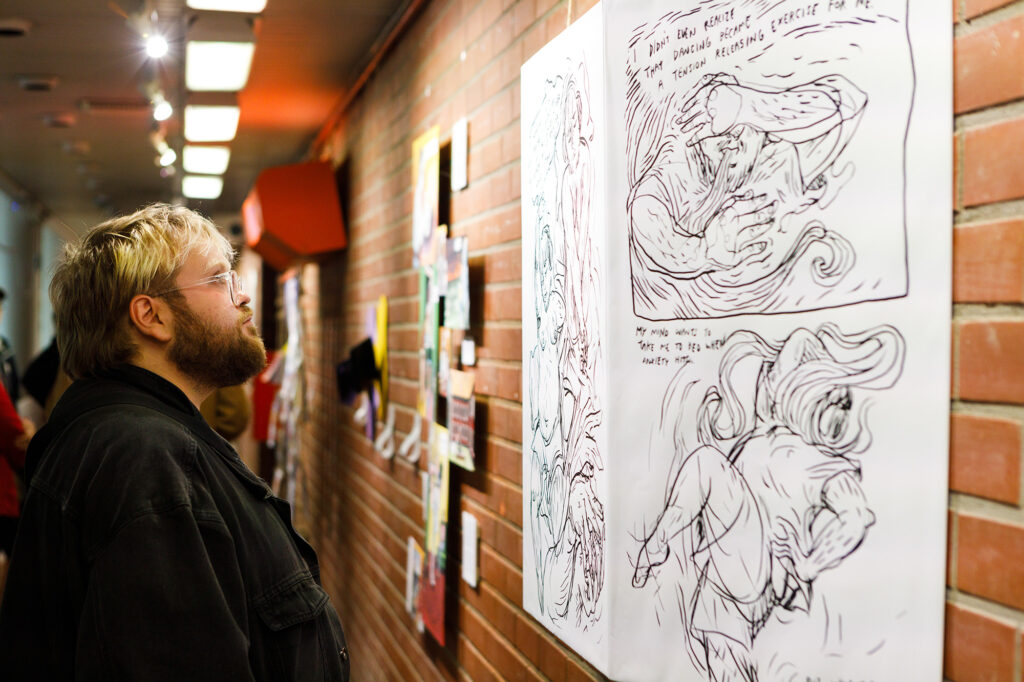
Taneli Kemppi at Helsinki Comics Festival. Photo: Nicola Giovanni
Work without security
Concerns about livelihood, the respect for one’s own or one’s field of art and the poor prospects of the publishing industry recur in the responses.
“In my view, the problems in the comics field are the same as those in all other creative fields: unpaid work and generally poor levels of remuneration, non-existent social security, uneven distribution of caregiving responsibilities, and the low esteem of the arts.”
“One thing I envy about people working in other fields is occupational health care. Public health care in Finland is becoming so run-down that it is a major struggle to get, for example, an appointment with a doctor. Also, the rights of grant-funded workers to unemployment benefits, earnings-related benefits and other entitlements that others receive automatically are non-existent.”
The situation has not improved since the study was completed, and the crisis in the book sector is reflected among comic artists as well. Sales for comics have been going down for quite a long time. In recent years in Finland, for example, the VAT on books has been raised and the (already very small) quality support for books has been removed. That support was used to acquire works for libraries afterwards, although it could never be compared to Norway’s innkjøpsordning system. In Finnish literature and comics, artists are supported, not book production. Unfortunately.
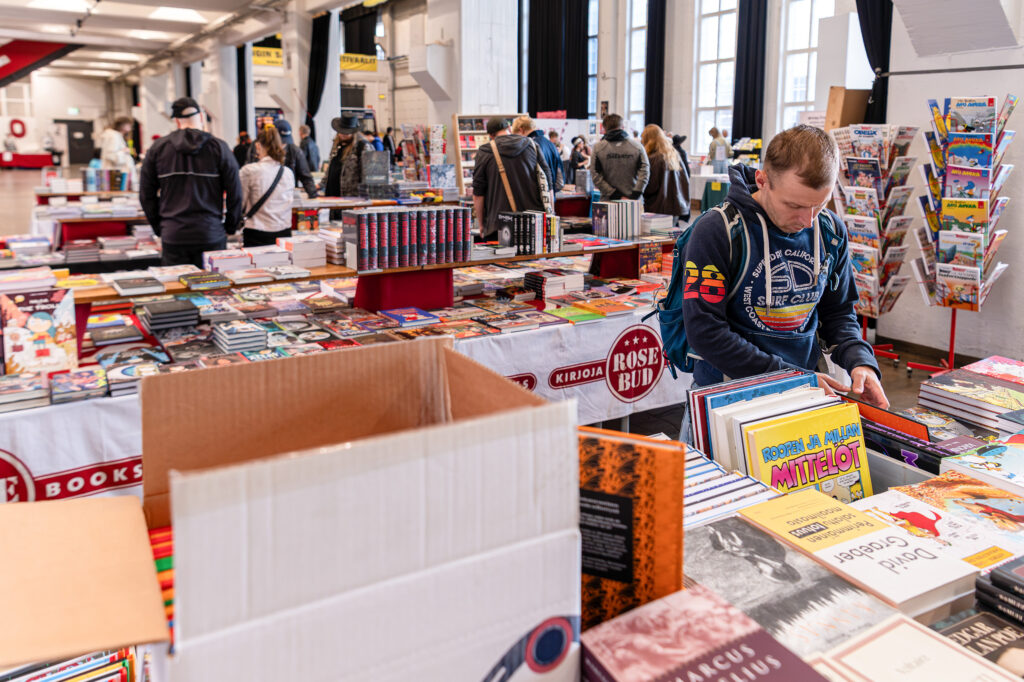
Books at Helsinki Comics Festival. Photo: Juho Liukkonen
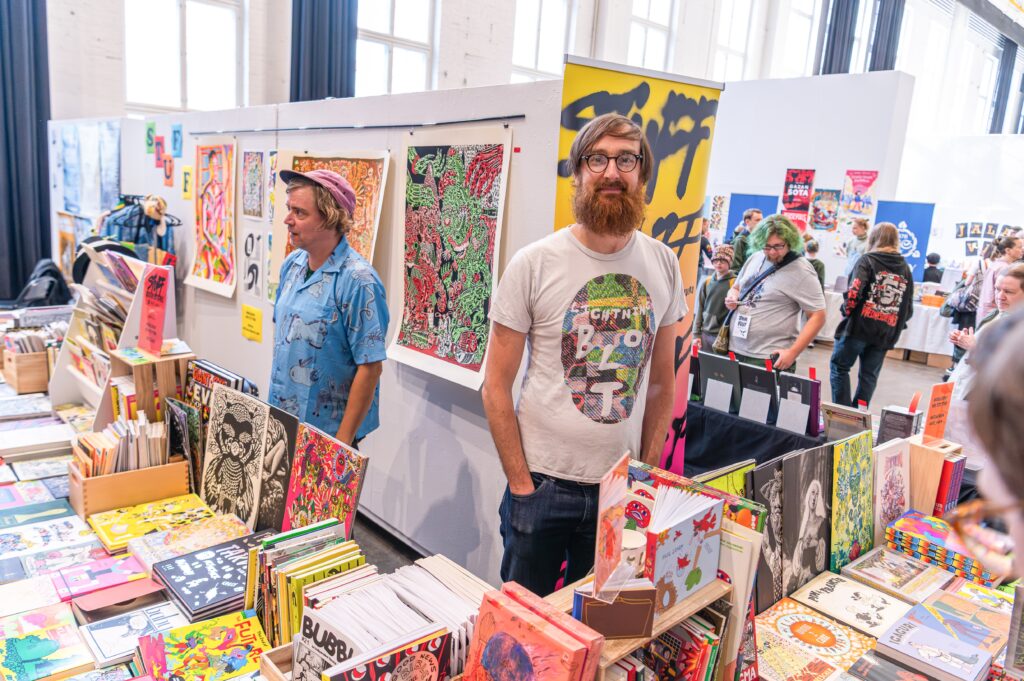
Tommi Musturi and Jelle Hugaerts at Helsinki Comics Festival. Photo: Joonas Kohonen
An independent voice
The constant struggle for money and the lack of permanent structures are characteristic of the field, although progress has been made in some areas. Professional pride is, however, intact — and justified. The work did not seem pointless to the respondents. The responses showed that even if comics have at times been squeezed by larger art forms, they have their own independent voice and some status.
Significant cuts have been made in the organisational field and the entire cultural sector in recent years in Finland. Still, it is worth — or necessary — to think as one respondent did:
“Although the decline of comics is linked to the weakening of the entire book sector and the decrease in people’s interest in reading, I believe that through cooperation between comics associations, publishers, the Arts Promotion Centre, libraries and schools, the visibility and appreciation of comics could be improved.”
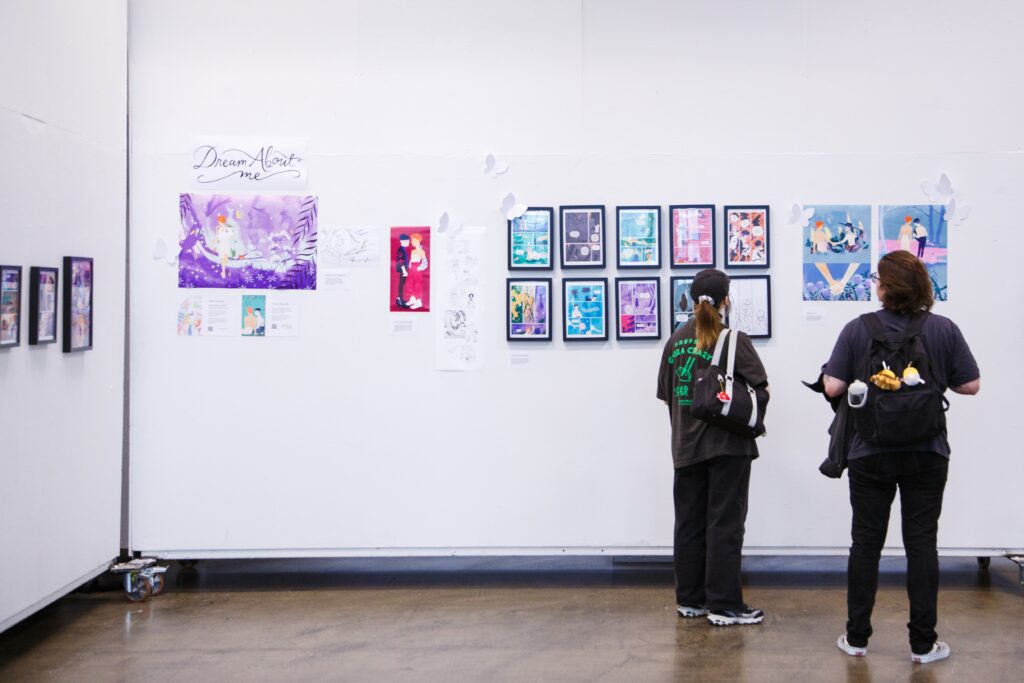
Zine Fest exhibition at Helsinki Comics Festival. Photo: Elina Räsänen
The author is a Finnish journalist and writer who specialises in comics.
Helsinki Comics Festival and Kids’ Comics Festival at Stoa, 18–20 September 2026. https://sarjakuvafestivaalit.fi
Ville Hänninen (ed.) Sarjakuvan paikka. Nykysarjakuva suomalaisen taiteen kentällä (online at https://issuu.com/kutikuti/docs/sarjakuvan_paikka) Kutikuti ry, 2024
Thank you to the Finnish–Norwegian Cultural Foundation for funding for this article. It is part of a cooperation project between Empirix.no and Sarjainfo, Finland’s comics culture magazine published by the Finnish Comics Society since 1972.